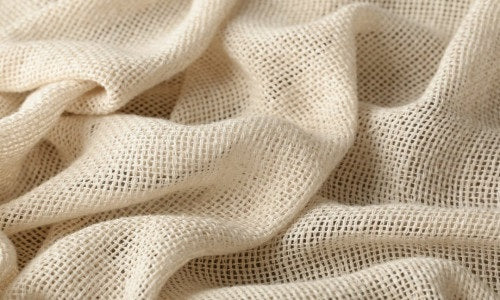
white
| Model Number | BF12 |
| Price | ₹ 3522.00 / piece |
| Min. order | 1 |
| Country of Origin | India |
| Category | Biodegradable Fabrics |
| Weight | 50.00 gms |
| L × W × H | 60.00 × 60.00 × 60.00 cm |
white
Here are the top benefits of such fabric-
Since this fabric is made up of biodegradable fibers that break down and degrade in the soil, it doesn’t cause soil pollution, keeping the environment safe.
There are several economic advantages to ecological fabrics. Here are a few
Competitive advantage
The demand for sustainable products is rapidly increasing as consumers become more aware of the environmental impact of their purchases.
Adopting biodegradable fabrics positions your business as a leader in sustainability, showcasing your commitment to ethical practices and environmental stewardship.
This fosters customer loyalty and attracts like-minded investors and partners.
Also Incorporating biodegradable fabrics into your product line allows you to tap into this growing market, attracting environmentally conscious customers and gaining a competitive edge.
Innovation opportunities
As people become conscious of biodegradable clothing, businesses may innovate different products and marketing strategies.
Streamline production
From a manufacturing perspective, integrating biodegradable fabrics streamlines production processes.
These fabrics are often produced using eco-friendly methods, reducing the use of harmful chemicals and minimizing water and energy consumption.
Aside from being environmentally friendly, the fabric is also safe for skin and health.
Comfort
Fabric made from biodegradable yarn gives better comfort than fabric made from man-made yarn. You can breathe more easily when you wear fabrics made from natural and biodegradable fibers.
Organic cotton, hemp, and Tencel are all kinds of biodegradable fibers that allow more air inside the fabric. Thus, biodegradable fabrics are almost always breathable, soft, and comfortable to wear.
Improved air quality
A biodegradable fabric can help improve air quality by absorbing pollutants. Since they're made from natural fibers, they have a lot of surface area.
Reduced skin irritation
Synthetic fabrics are more likely to irritate the skin than biodegradable fabrics. Due to their natural fibers, they are unlikely to cause allergies.
Reduced exposure to harmful chemicals
Eco-friendly fibers are dyed with natural dyes. So they are less harmful to the environment than synthetic dyes. This reduces the risk of exposure to harmful substances that could harm your health.
So, basically, you need to know what the production process looks like if you want to make biodegradable fabrics rather than regular fabrics. Here are some special procedures you will need to follow at different production stages.
Let’s take a look at them.
Pre-treatment
At this stage, the fiber needs to be carefully sorted. Make sure you do not mix different lots. At this stage, make sure you remove all kinds of impurities, dirt, and residual chemicals.
Spinning
The spinning of the biodegradable yarn is no different than regular yarn production.
Sustainable fiber sourcing is the right thing to do at this stage to produce biodegradable yarn. The general spinning process remains the same.
Weaving/Knitting
When producing biodegradable fabric, there are no specific weaving or knitting processes that are exclusive to biodegradable materials.
The weaving or knitting techniques used for biodegradable fabric are generally similar to those used for regular fabrics.
The main difference lies in the choice of biodegradable fibers used as raw materials.
Finishing
Unlike the spinning, weaving, and knitting processes, there are a lot of things to do at the finishing stage.
Choosing non-toxic dyes and chemicals with minimal usage is a key principle of eco-friendly fabric production.
Non-toxic wax and finishes must be used to make sure the fabric is free from skin irritation and safe for the environment.
There are many potential applications for biodegradable fabrics, including:
There is no doubt about the upcoming prospect of eco-friendly fabric; there are some challenges there, however.
This is the stepping stone and secret sauce to making the biodegradable fabric more available to consumers. Otherwise, the goal of environmental safety through biodegradable fabric won’t have that much impact.
So, what can you do? Here are some ideas -
Educating Consumers on Biodegradable Fabric
Educating consumers about biodegradable fabric is essential to raising awareness and promoting sustainable fashion choices. Here are some key points to consider when educating consumers:
Here are some of the following consumers should be taught-
What are biodegradable fabric
Types of Biodegradable Fabrics
Manufacturing Process
Care Instructions
Certification and Labels
Consumer Perception of Biodegradable Fabric
Consumer perception plays a crucial role in the adoption of biodegradable fabrics. Here are some factors that influence consumer perception:
Responsibility of Consumers in Sustainable Fashion
Consumers have a significant role in promoting sustainable fashion. Here are some ways consumers can take responsibility:
The future of biodegradable fabric largely relies on innovation. To make the most of it, continuous research and development are inevitable. There is a lot of room to make new products and optimize the manufacturing process.
Innovation in novel production techniques, new biodegradable materials, and biotechnology.
Also, a couple of things needed to be changed in collaboration and partnership. Businesses can work on sustainable supply chains, industry collaboration, cross-section collaboration, consumer engagement, etc.
The cellulosic components of natural fiber help fabric degrade in nature. Some man-made fibers are also eco-friendly but degrade under certain conditions. Bio-friendly fabrics are environmentally friendly, cost-effective, and good for the skin.
Despite the growing interest in organic fabric, it is still an emerging topic. There is plenty of room for improvement. In which area of textiles, do you want to utilize decomposable fabric?
I think the future of textiles will be dominated by degradable fabric in the coming days- We will have rules and restrictions from the government and international organizations to produce it properly. However, people should be more aware of it for their own sake.
1. What is the biodegradable fabric?
Biodegradable fabric is a special kind of fabric made from decomposable natural fiber.
2. What are the benefits of biodegradable fabric?
The benefits of using biodegradable fabric include-
Environmental safety.
Economical.
Good for health.
3. How is a biodegradable fabric made?
Biodegradable fabric is made from biodegradable fiber. Generally, natural fibers are biodegradable. Once you have the bio-friendly yarn, you can process it using sustainable manufacturing techniques.
Best Quality Sustainable Hessian & Jute Products in Australia
“Axon: The Smarter Choice — Sustainable Jute & Hessian Replacing Toxic Plastic.”
| Fabric | Polycotton |
| Packaging Info | Each clothing item is carefully folded and packed in a high-quality, eco-friendly polybag or box to ensure protection during transit |
| Payment Terms | We accept payments via bank transfer, UPI, credit/debit cards, and major digital wallets |
_1289.jfif)
 India -
Established: December 2015
sa**********@yopmail.com



.webp)

.webp)
.webp)